Profile

RG

Product Design (Waysorted)

Comment Summarizer: AI That Turns Design Feedback Into Decisions

AI that makes feedback digestible and actionable.

Leveraged skills

Product Strategy • UX/UI • AI Integration • Workflow Design • User Research • IA • Conversion Optimization • Product Thinking • Founder-Led Decision Making

Overview

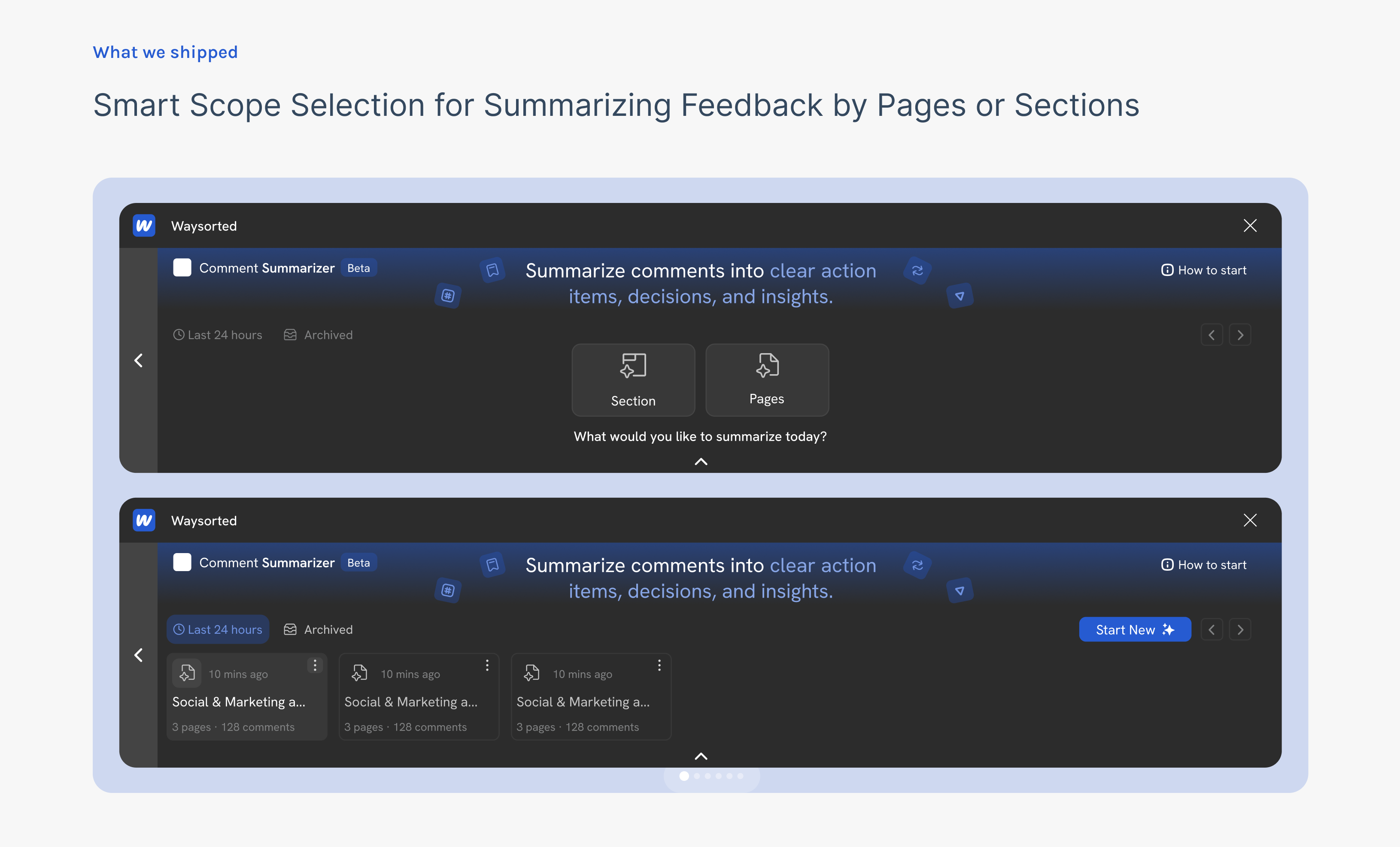
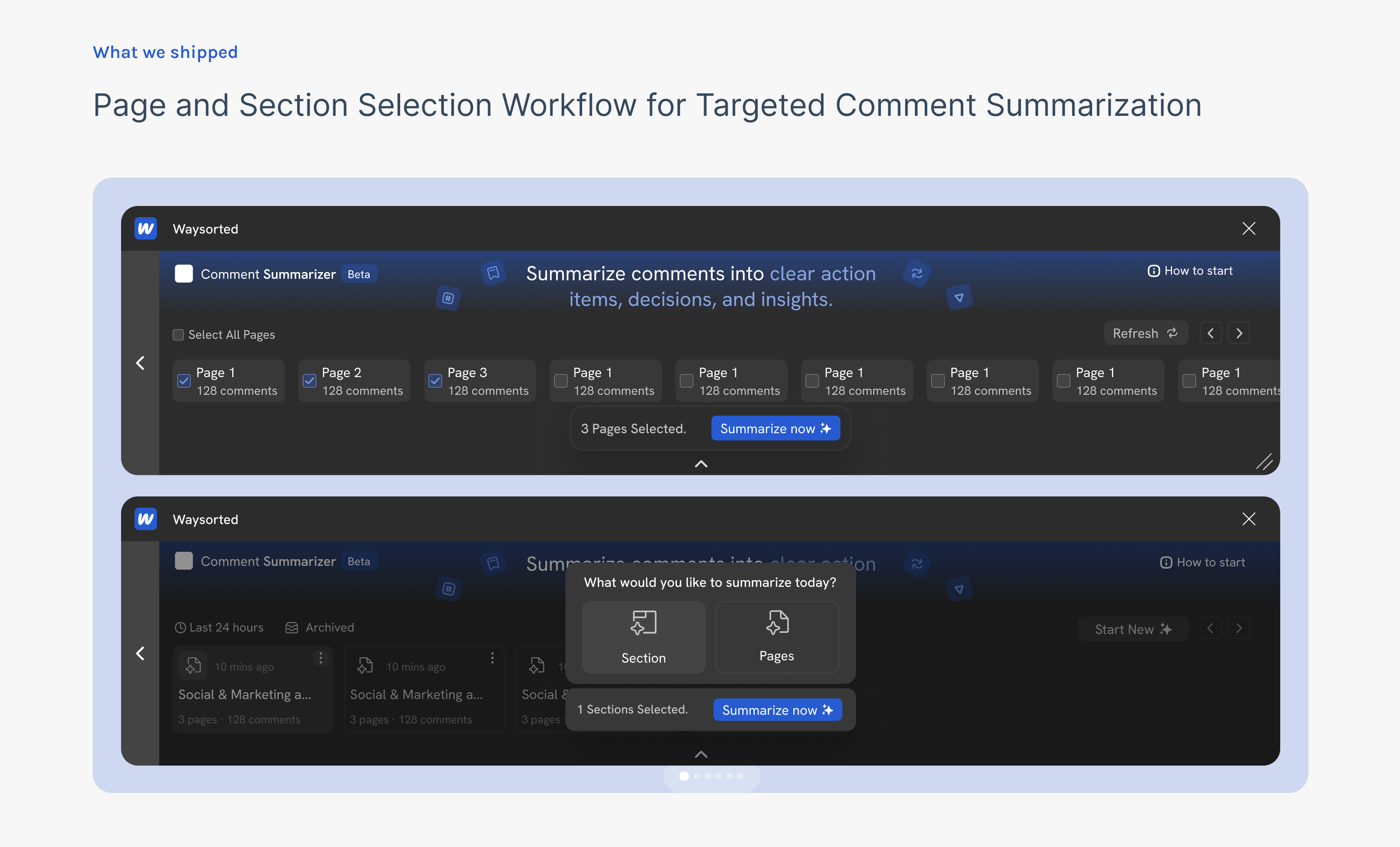
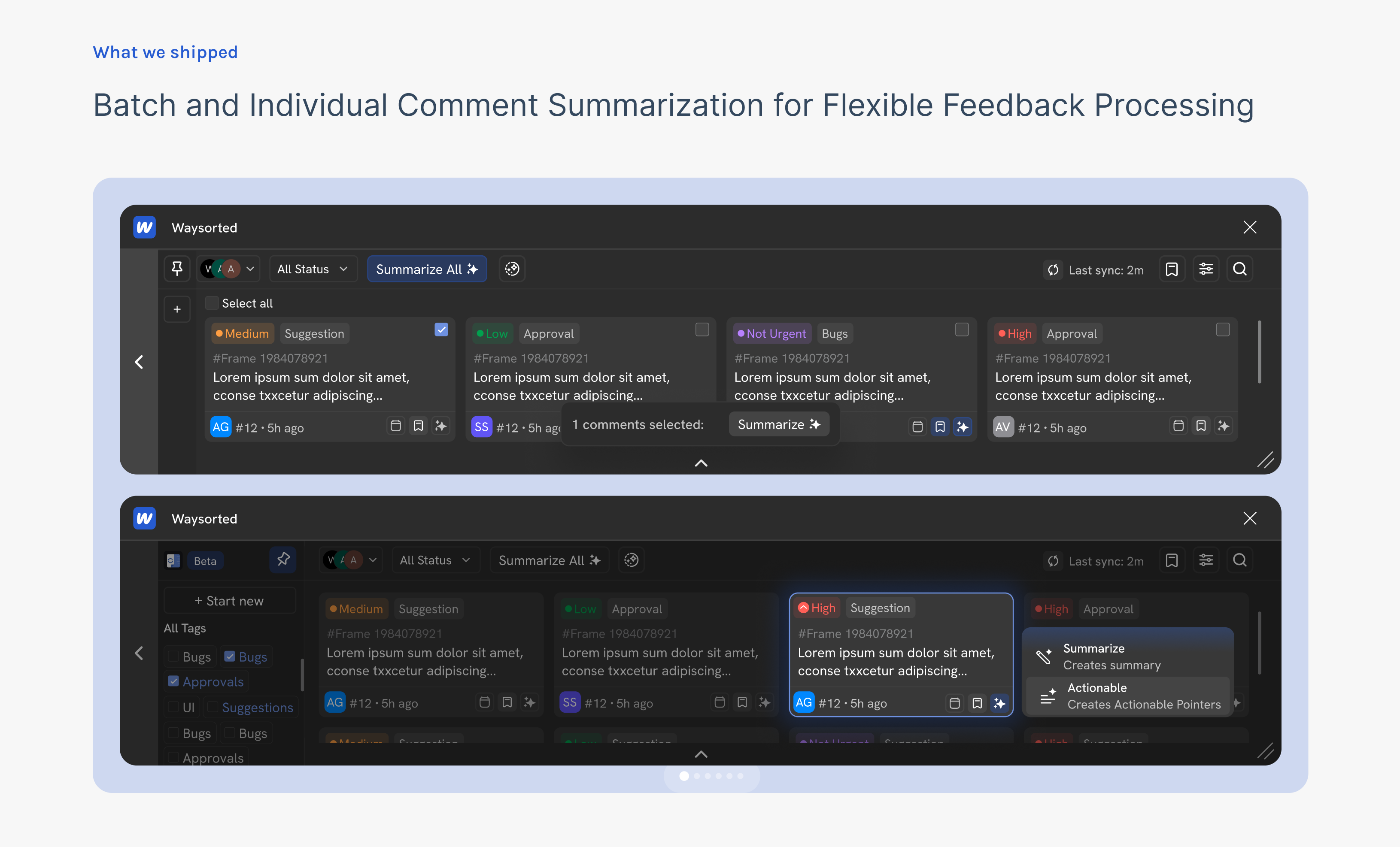
Design reviews often lead to scattered, overwhelming comment threads that slow down decision-making. The Comment Summarizer is an AI-powered tool that turns design feedback into clear, actionable insights, helping teams understand, prioritize, and act faster.

My role

Co-Founder/ Designer/ Strategist

Team

MeF2F3PMURTech

Timeline

2026 Q1

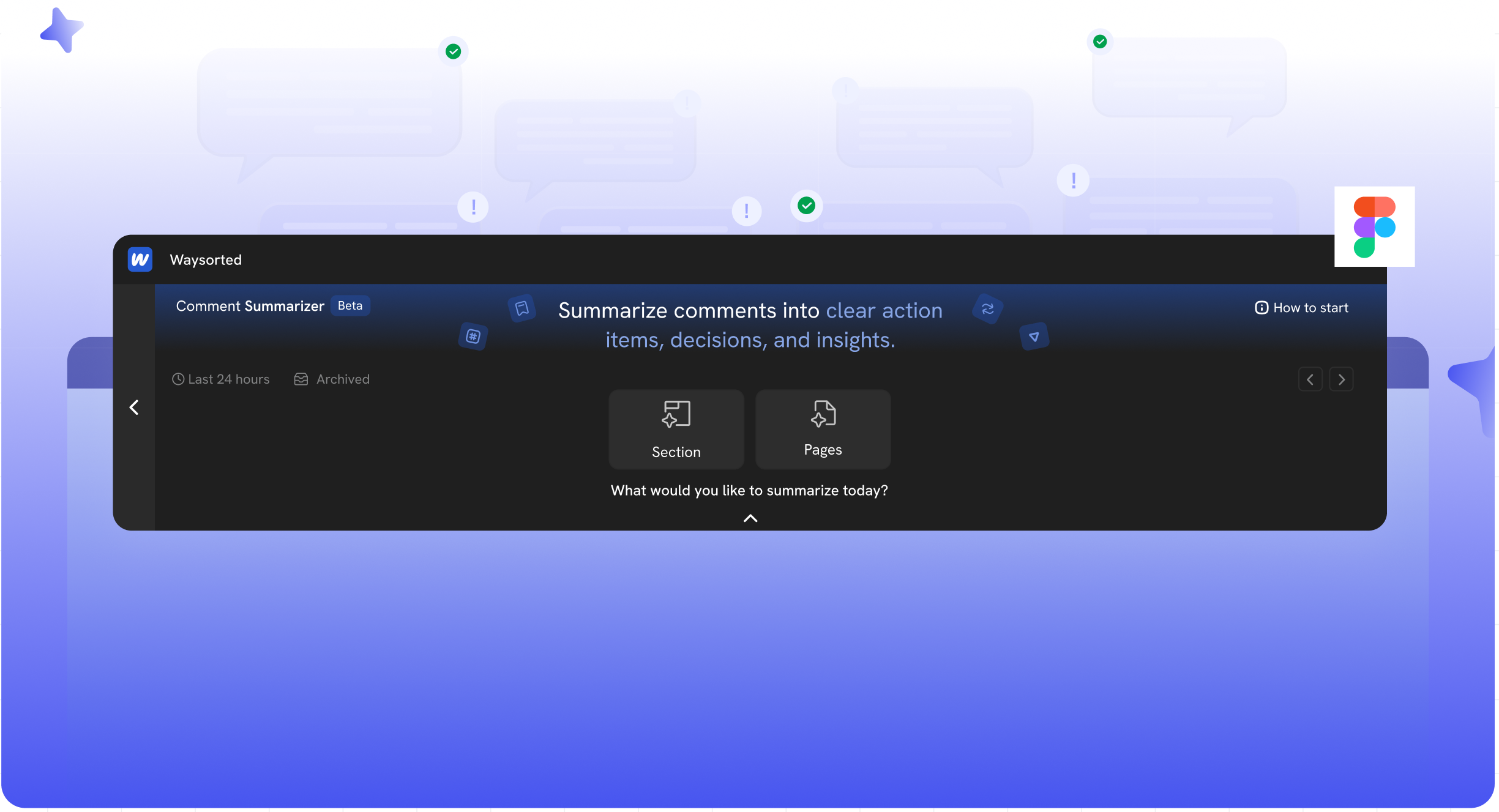
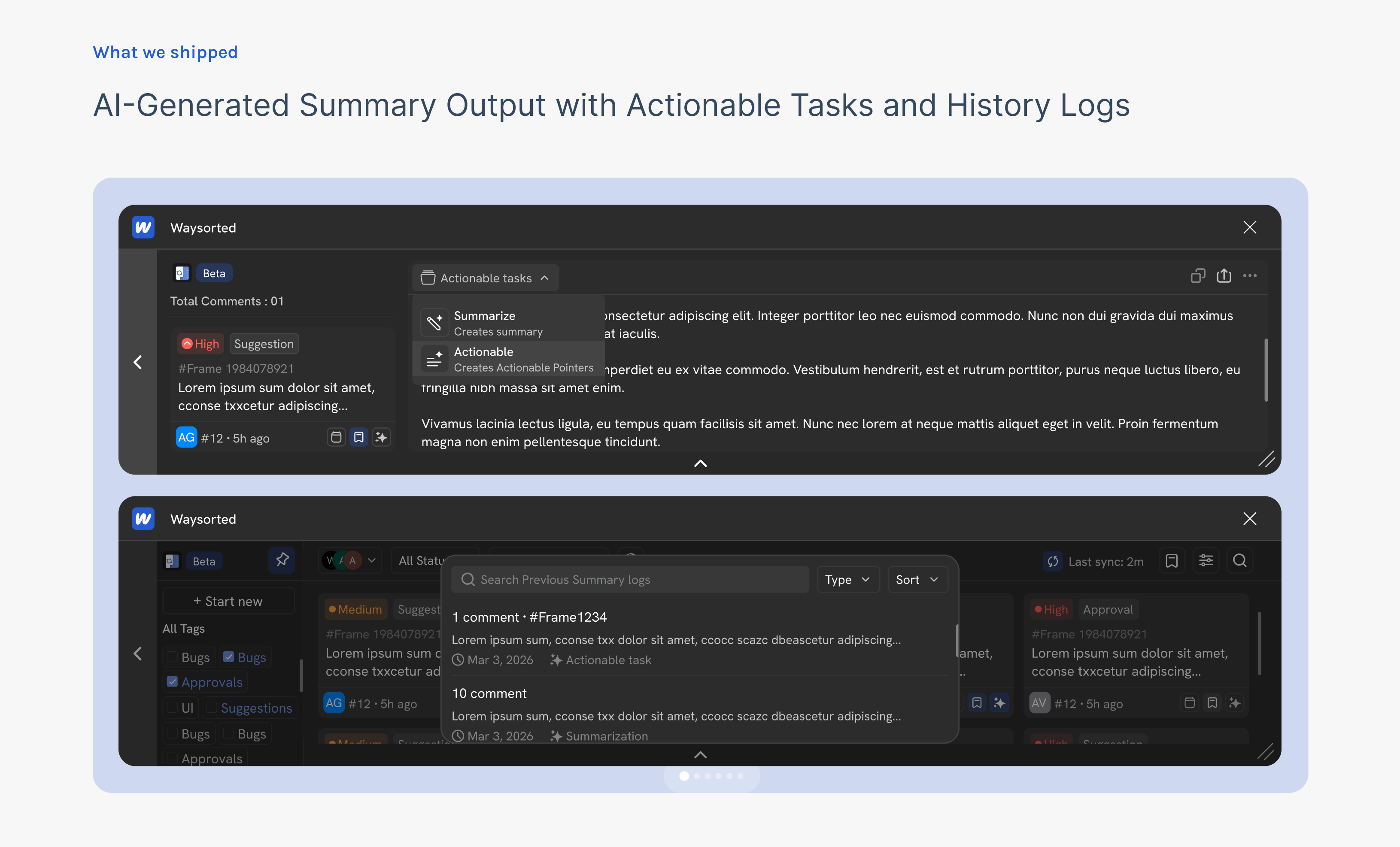
Comment Summarizer product hero

Why we started?

Important feedback gets buried, and teams struggle to turn comments into clear decisions.

The focus was on reducing time spent scanning long comment threads and helping teams quickly identify what matters, by making feedback easier to digest, structured, and actionable.

Key Insight

Clear summaries that highlight what matters enable faster, confident decisions.

Users were not lacking feedback; they were overwhelmed by it. They could not easily distinguish between suggestions, issues, or final decisions, leading to delays and repeated discussions.

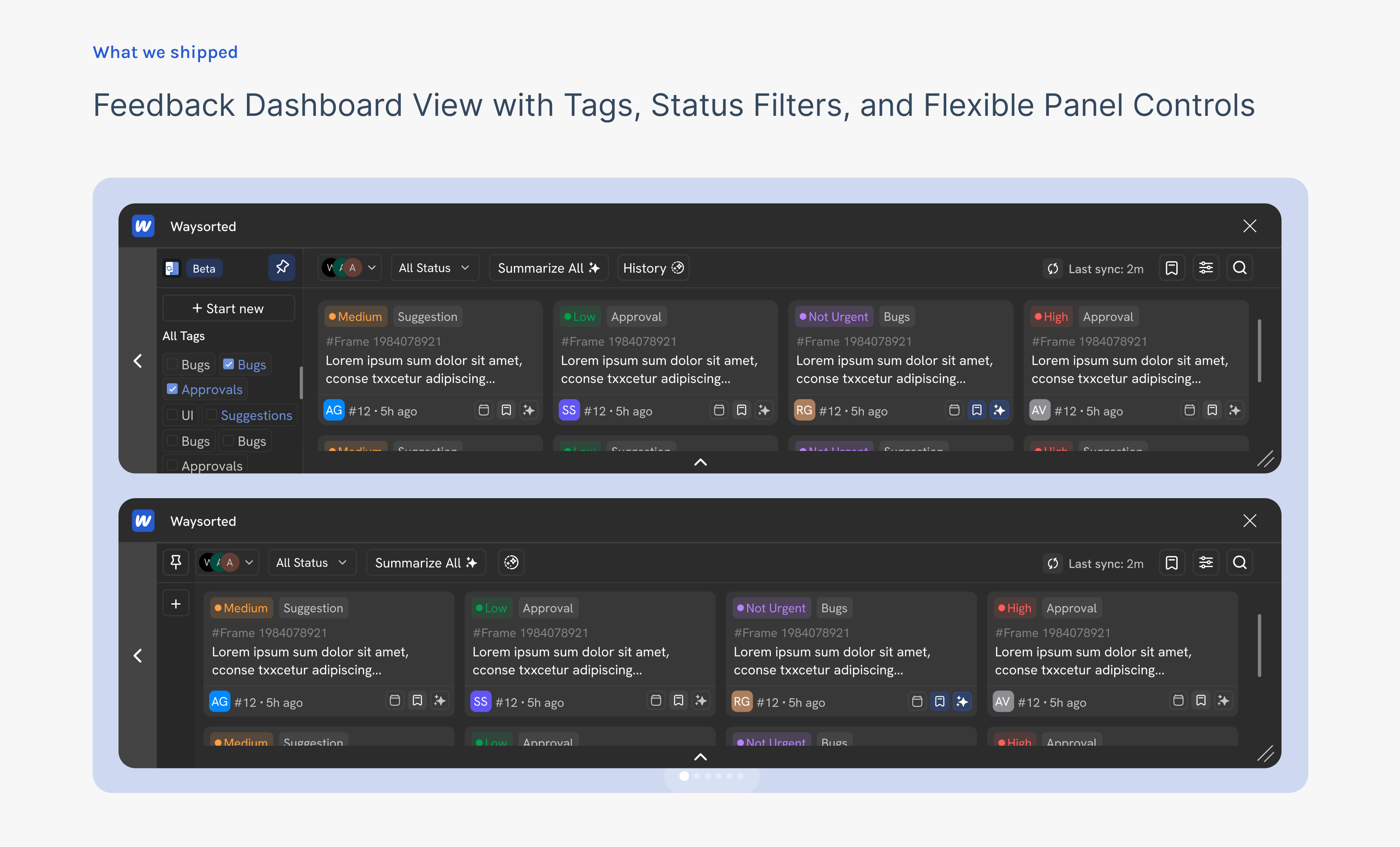
The solution was to organize comments into meaningful summaries, highlight priorities, and present actionable insights, helping teams move from scattered feedback to confident decisions with minimal effort.

+ Insights at Glance

+60%

Faster decision-making

Clear categorization helped teams move from discussion to action quicker.

-50%

Cognitive load during review

Breaking feedback into structured insights made large volumes of comments easier to process.

+45%

Clarity in understanding

Users could instantly grasp key points without digging through long threads.

How did we approached?
Design process overview

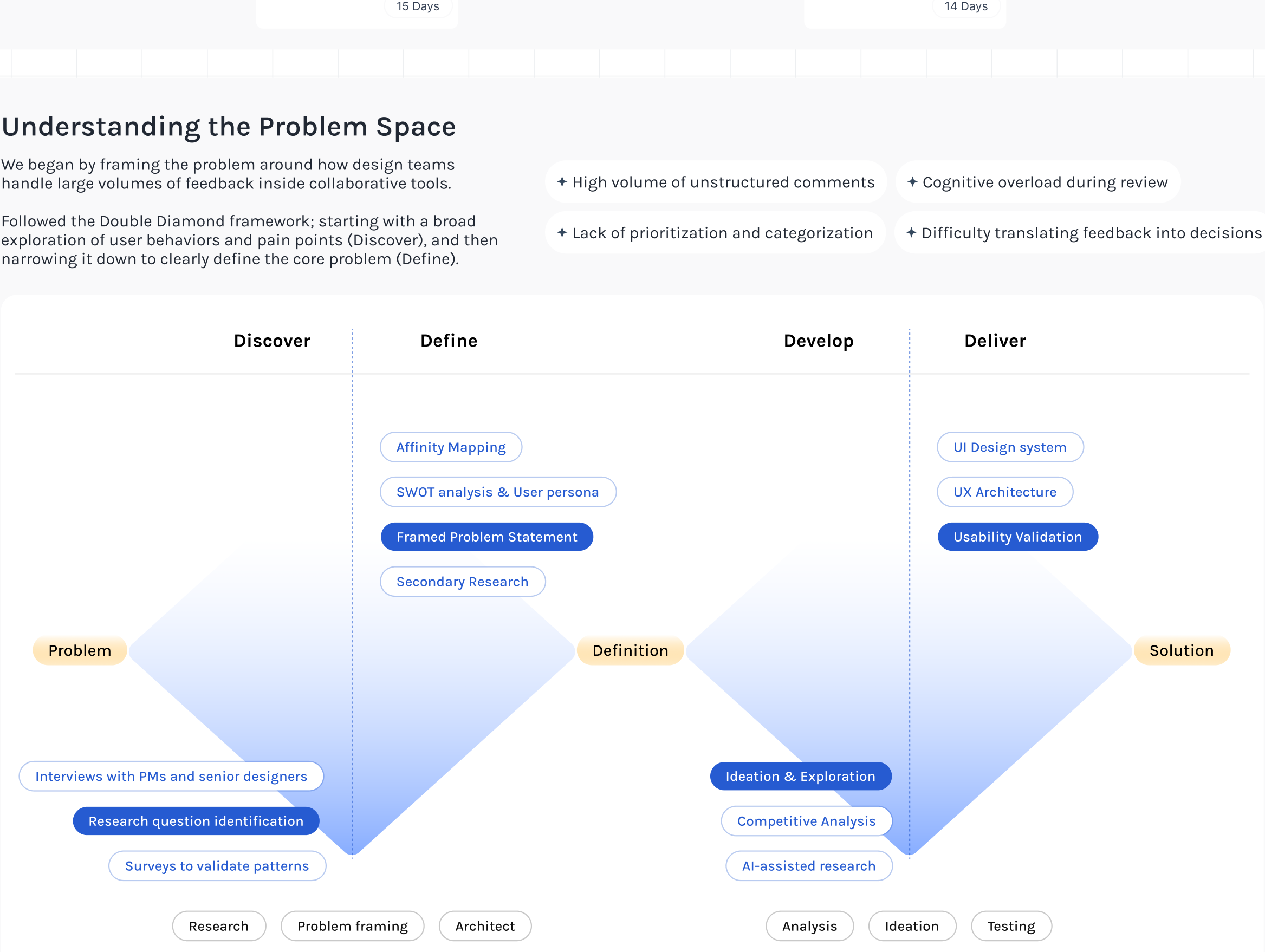
Understanding the Problem Space

We began by framing the problem around how design teams handle large volumes of feedback inside collaborative tools.

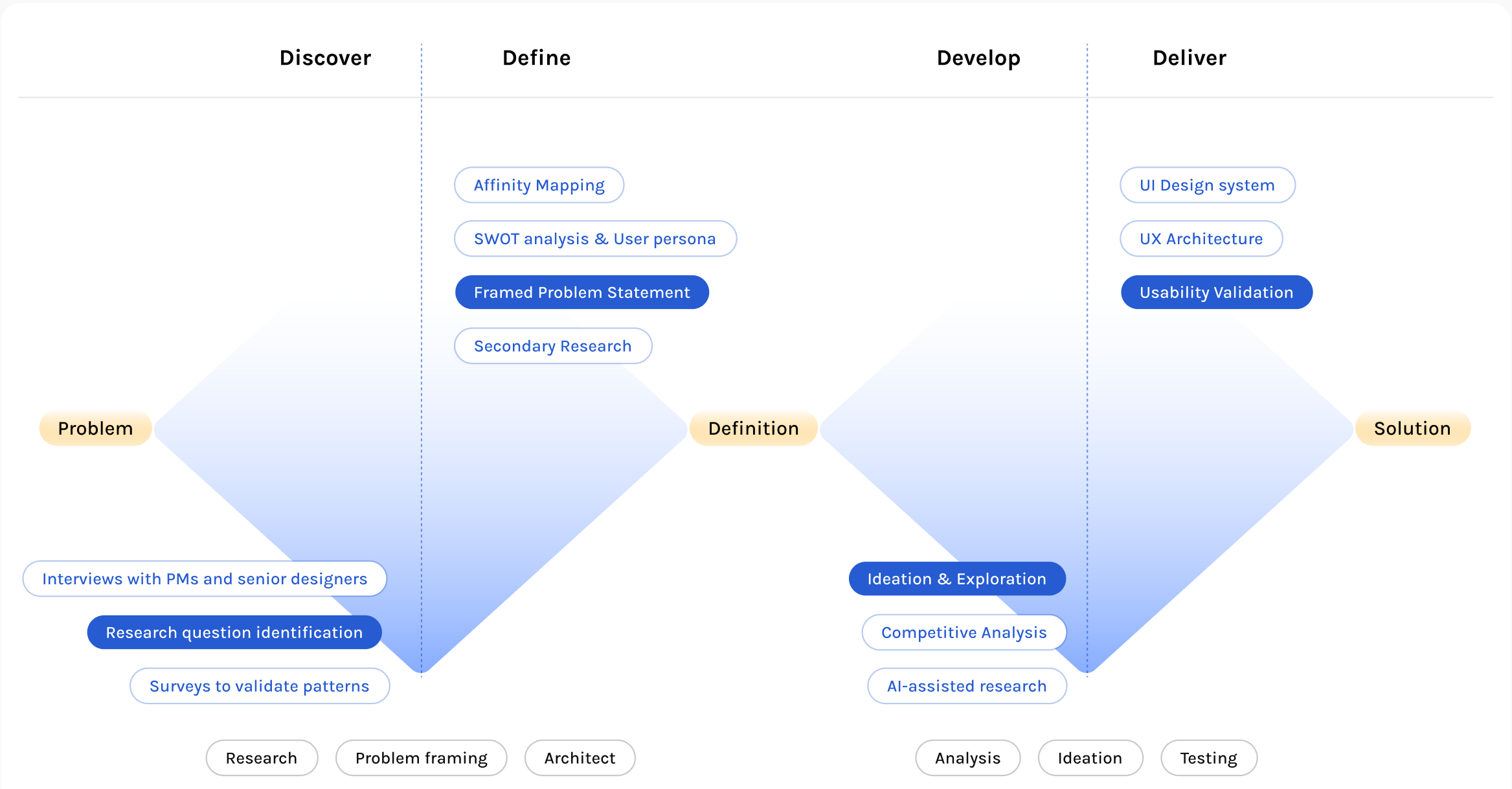
Followed the Double Diamond framework; starting with a broad exploration of user behaviors and pain points and then narrowing it down to clearly define the core problem.

+ High volume of unstructured comments+ Cognitive overload during review+ Lack of prioritization and categorization+ Difficulty translating feedback into decisions
Double diamond research framework

Research & Execution

Step #1 - Research Question Identification

We framed interview questions around how teams actually handle feedback, focusing on real behavior, what slows them down, and where decisions break.

Working with my UX researcher, we translated early assumptions into scenario-based questions to uncover patterns, not opinions.

We structured everything in Notion, mapping each question to both user behavior and workflow impact. ChatGPT helped refine the questions to uncover deeper issues around clarity, prioritization, and actionability.
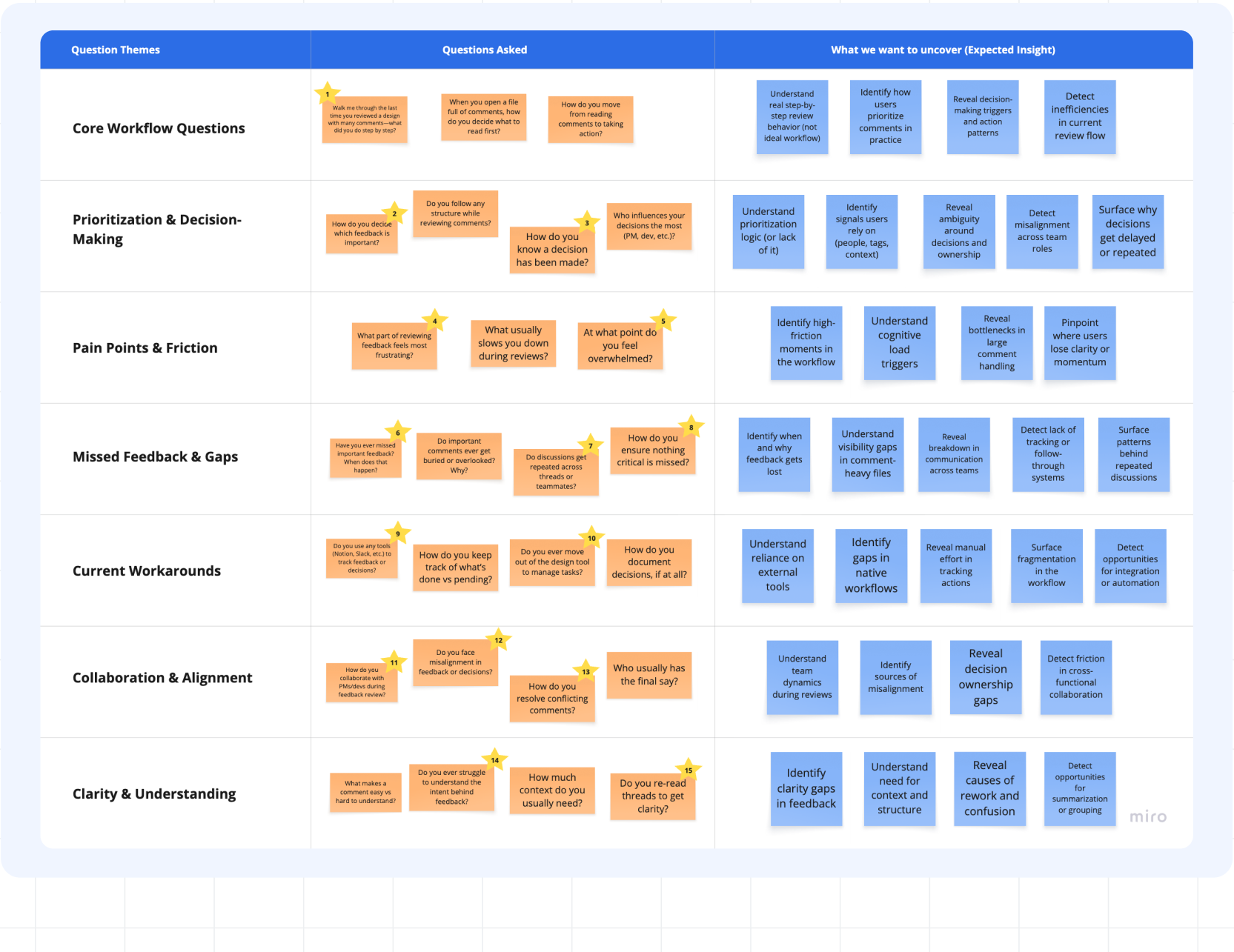
Research question identification matrix

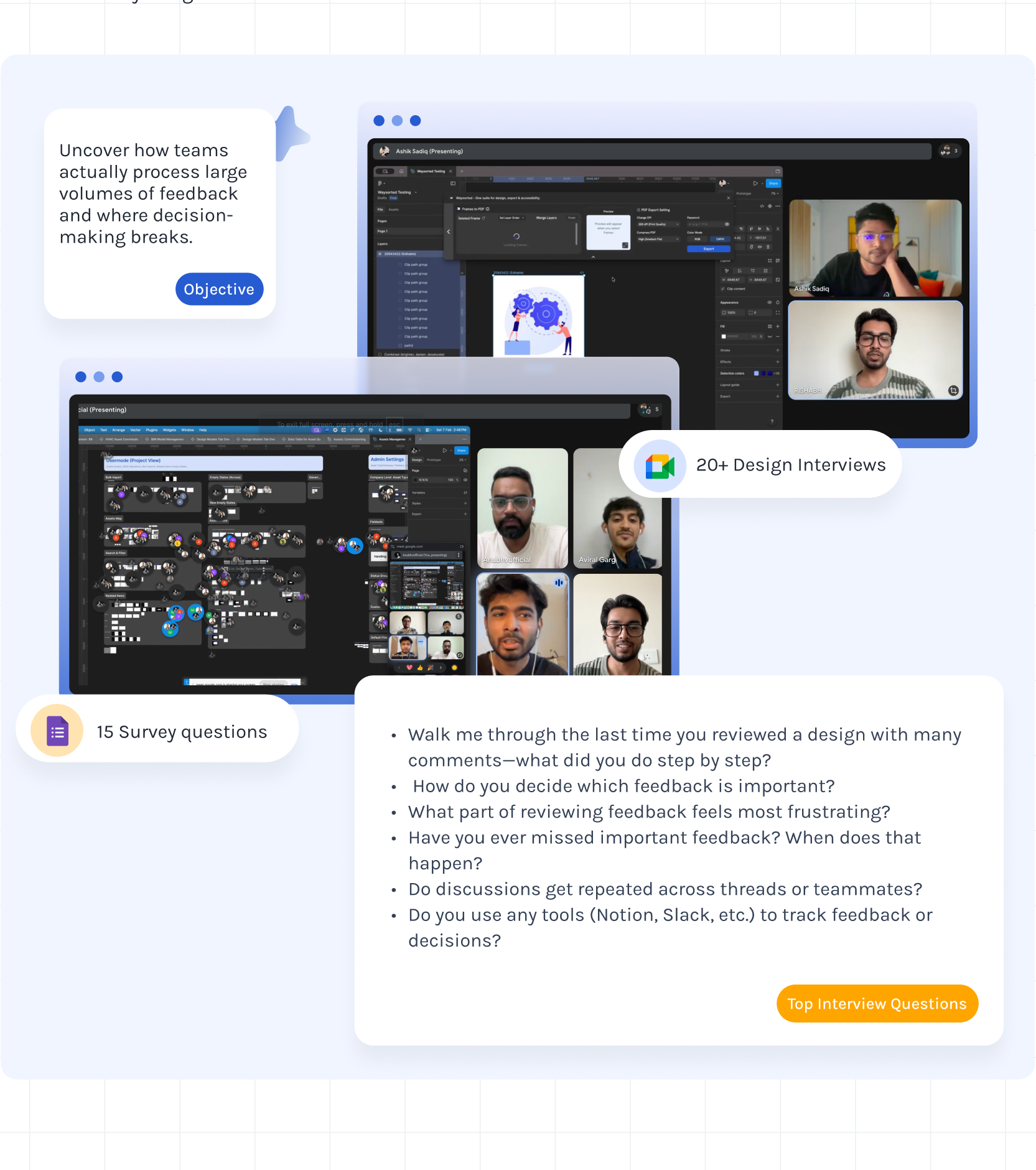
Step #2 - Interviews & Surveys with PMs, Senior Designers

Conducted interviews with Product Managers and Designers, complemented by surveys to validate patterns across teams.

The focus was not on opinions, but on real workflows, behaviors, and friction points observed while reviewing comment-heavy design files.

Interview and survey research board

Step #2.5 - Analysis & Synthesis

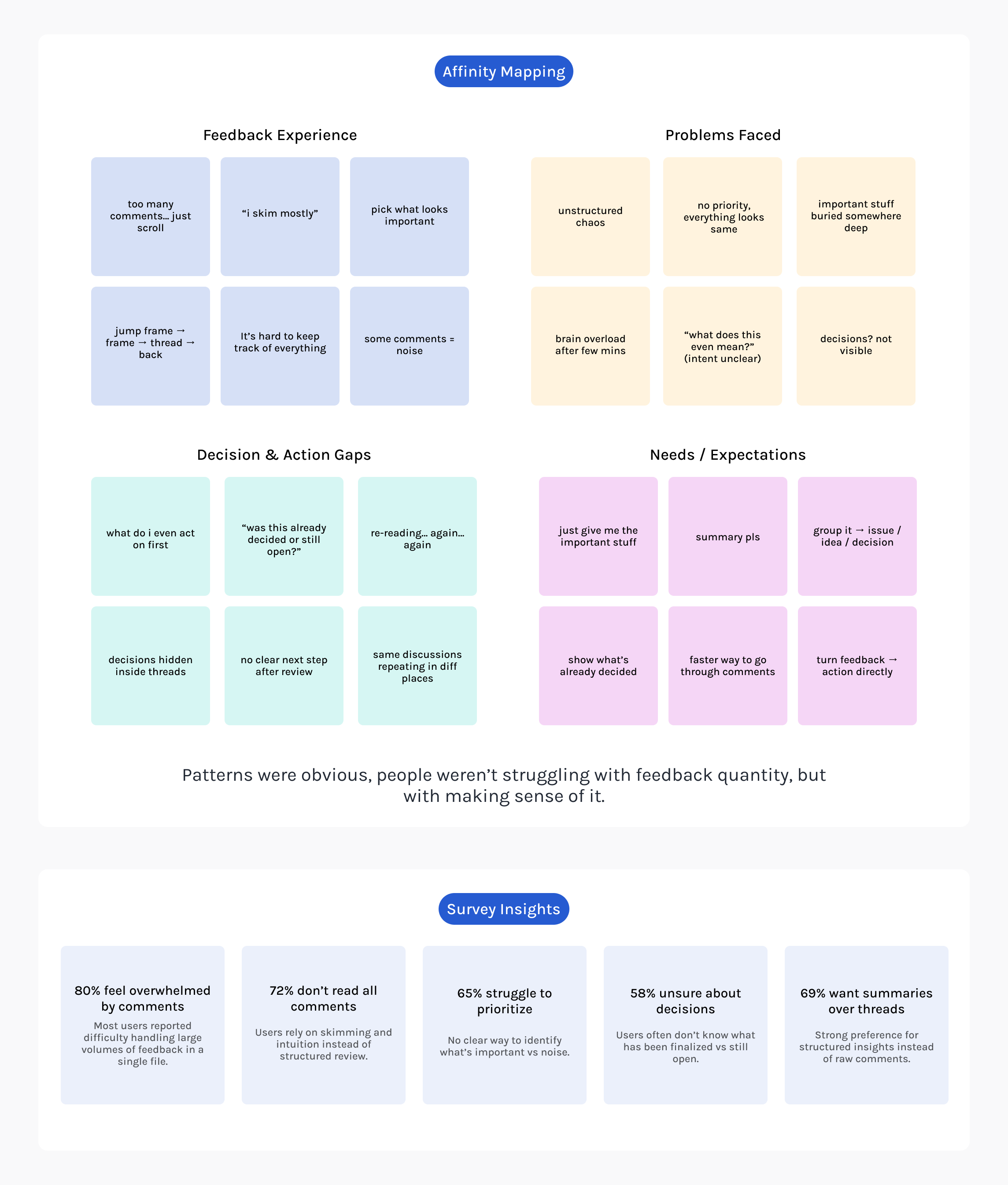
All interview notes, survey responses, and observations were consolidated and analyzed to identify recurring behaviors and friction points.

Using clustering and pattern mapping, raw feedback was transformed into structured insights.

Affinity mapping and survey insights board

Step #3 - Problem Statement

Partnering with my UX researcher, I turned research insights into clear problem definitions and directions for improving feedback-driven decision-making.

+ Core Problem
  • Feedback is scattered and unstructured
  • No clear distinction between ideas, issues, and decisions
  • Users rely on manual effort to summarize
  • Decision-making is slow and inconsistent
+ Opportunity Statement

There is an opportunity to transform raw feedback into structured, actionable insights that enable faster and clearer decision-making.

+ How Might We
  • How might we help designers process feedback without overload?
  • How might we make decisions visible and structured?
  • How might we reduce time spent reviewing comments?
  • How might we turn feedback into actionable outcomes instantly?

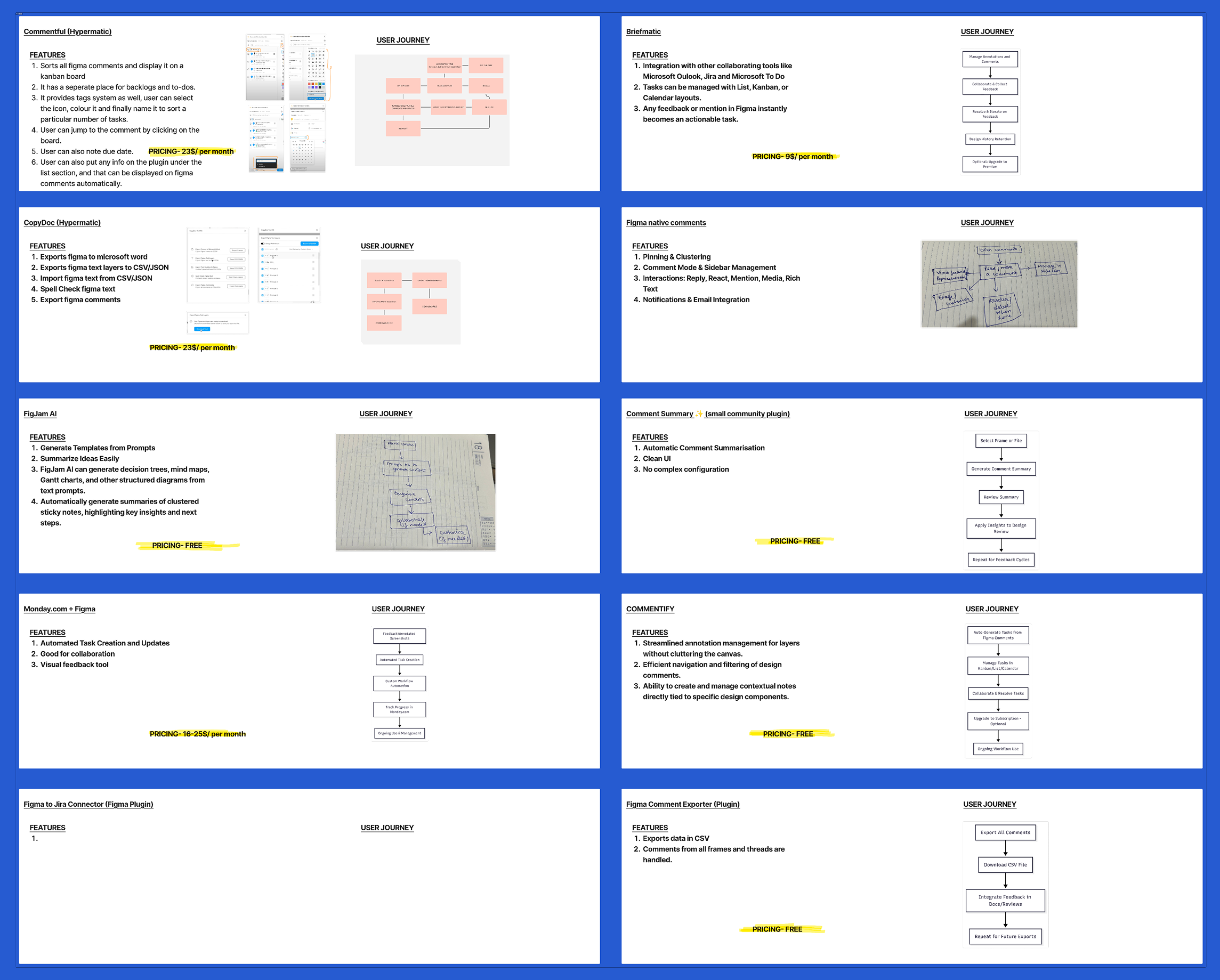
Step #4 - Competitive analysis

I collaborated with my UX researcher to evaluate top feedback and commenting tools, deep-diving into features, UX patterns, user flows, and pricing models to identify where current solutions fail to provide clarity, structure, and actionable insights.

Competitive analysis matrix

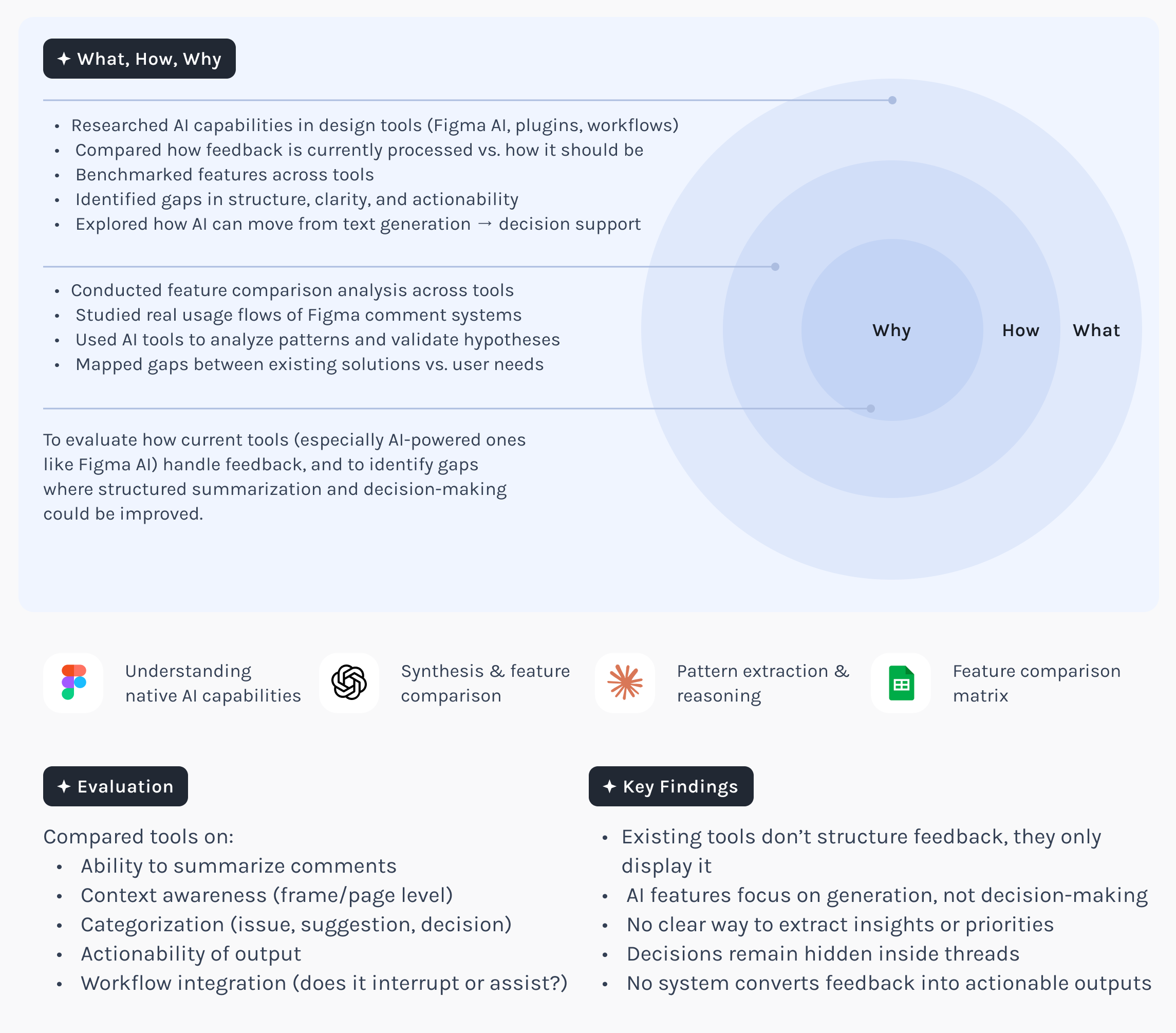
Step #5 - Secondary & AI-Assisted Research and Comparison with Figma AI

We explored existing AI tools, including Figma AI, to understand what is already possible and what is still missing when it comes to making feedback actually useful.

Secondary and AI-assisted research summary

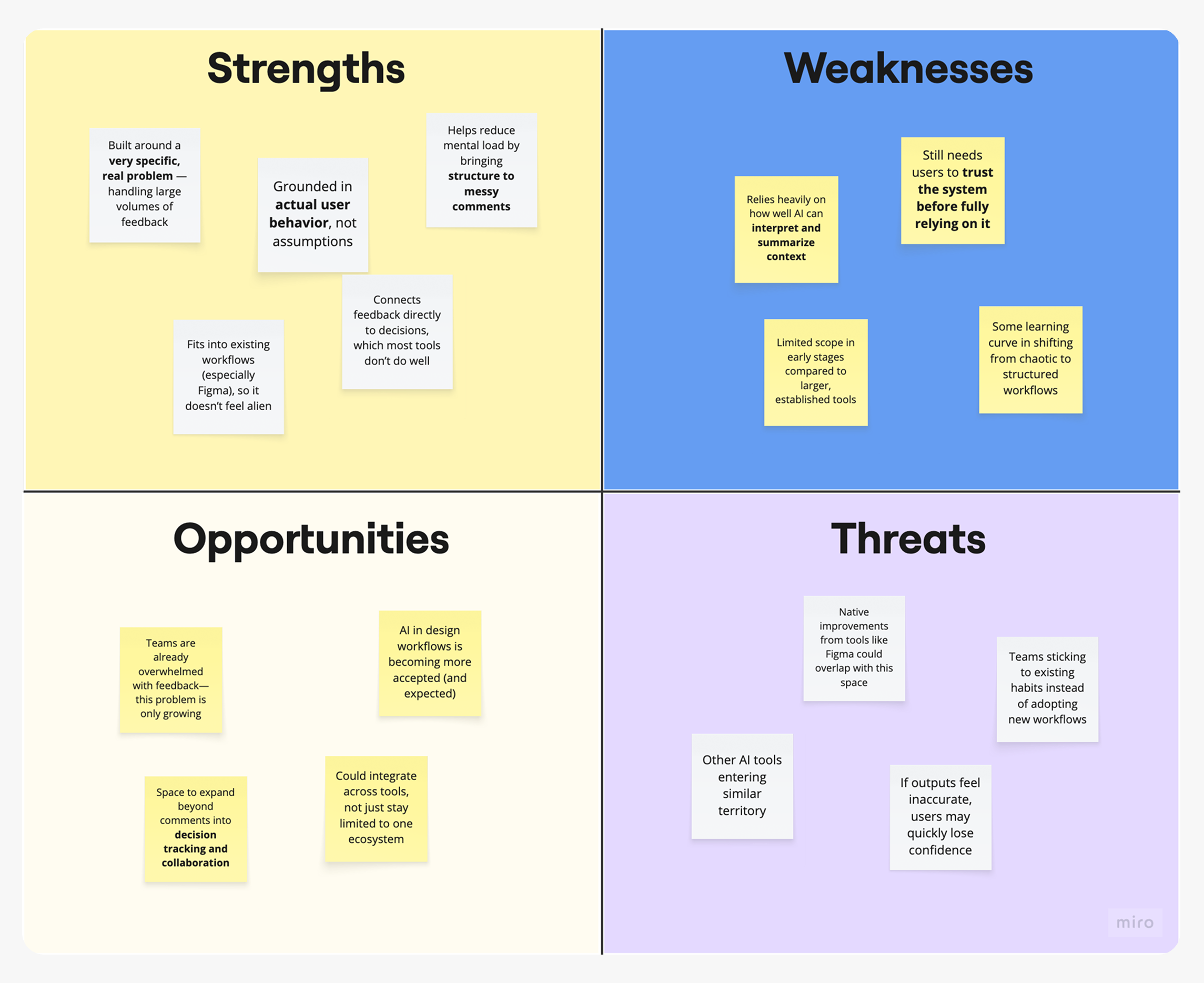
Step #6 - SWOT analysis

We took a step back to evaluate what is strong, what is shaky, and where Waysorted can improve, so it helps teams deal with feedback, not become more of it.

SWOT analysis board

Step #7 - User Personas & behavioral observations

We then created personas grounded in real behaviors, not assumptions. These personas reflect how designers and product teams actually navigate large volumes of feedback in collaborative tools.

We focused on where workflows break down, how people process comments, and what they need to move from scattered inputs to clear decisions.

Aarav Mehta

Product Designer

Aarav works on multiple design files with constant feedback from PMs, developers, and stakeholders. While feedback is frequent, it quickly becomes overwhelming, making it difficult to prioritize and act efficiently.

Challenges

  • Struggles to process large volumes of comments
  • No clear way to prioritize feedback
  • Misses important inputs buried in threads
  • Spends excessive time summarizing manually
  • Decisions are scattered across comments

Needs

  • Clear, structured summary of feedback
  • Ability to categorize issue, suggestion, and decision
  • Prioritization of comments
  • Faster transition from feedback to action
  • Reduced cognitive load during review

Behavioral Observations

  • Scans comments instead of reading everything
  • Relies on memory or manual notes
  • Frequently revisits the same threads
  • Switches between tools to track decisions
  • Delays decisions due to lack of clarity

Solution Direction

  • AI-powered summarization of comments
  • Tagging system for clarity and structure
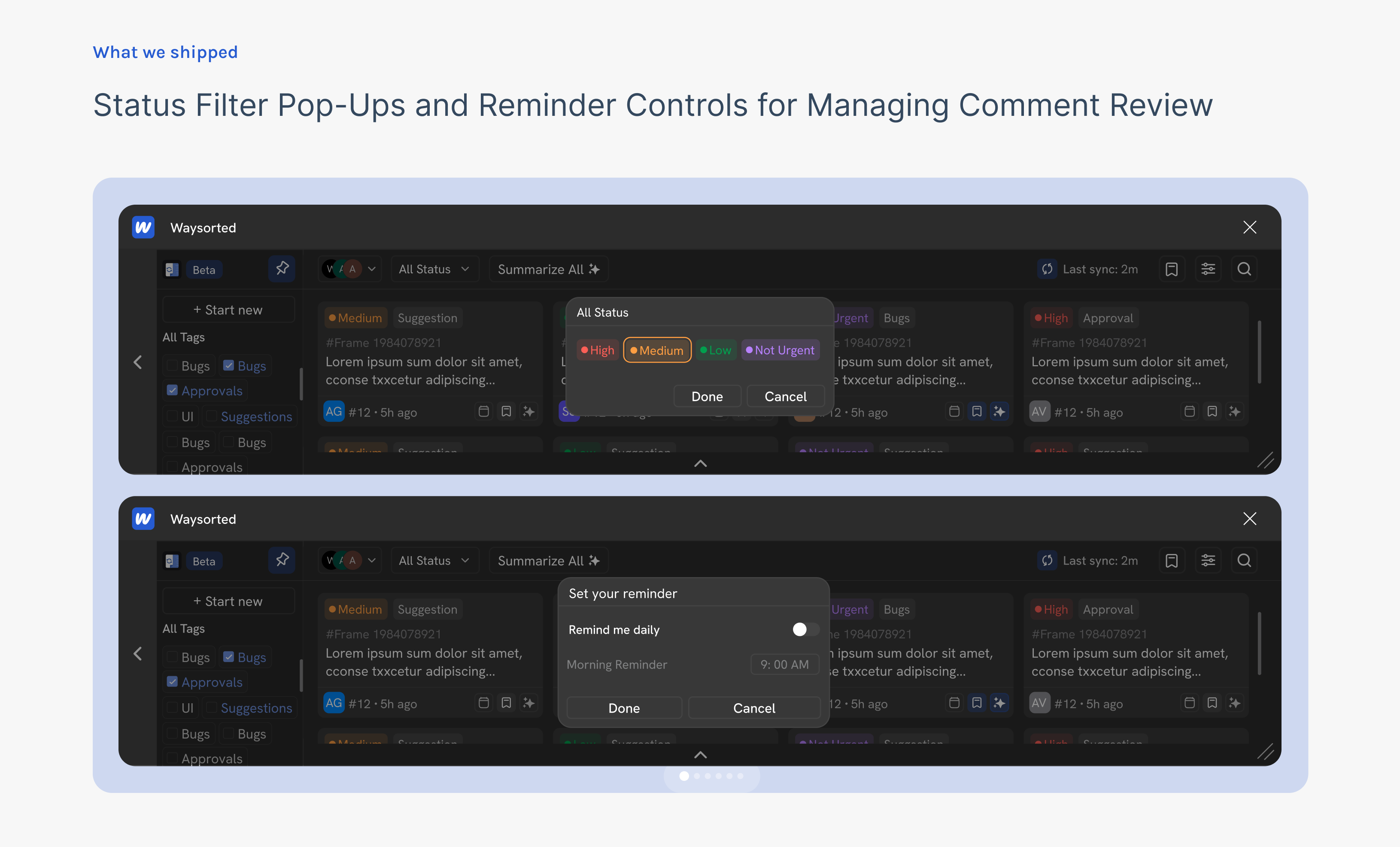
  • Priority-based filtering
  • Actionable outputs from feedback
  • Centralized decision visibility

Riya Sharma

Product Designer

Riya reviews design progress and gives feedback across multiple screens. She wants quick clarity but often gets stuck understanding long comment threads.

Challenges

  • Difficult to quickly understand design discussions
  • Hard to track what is resolved vs pending
  • No visibility into final decisions
  • Feedback gets repeated across discussions

Needs

  • Quick summaries instead of long threads
  • Clear decision visibility
  • Status tracking of feedback
  • Alignment with design and dev teams

Behavioral Observations

  • Skims through comments
  • Asks for summaries from designers
  • Focuses on outcomes, not discussions
  • Gets frustrated with repeated context

Solution Direction

  • High-level summaries for faster understanding
  • Decision highlights
  • Status-based feedback tracking
  • Reduced need for back-and-forth

Step #8 - Ideation & Exploration

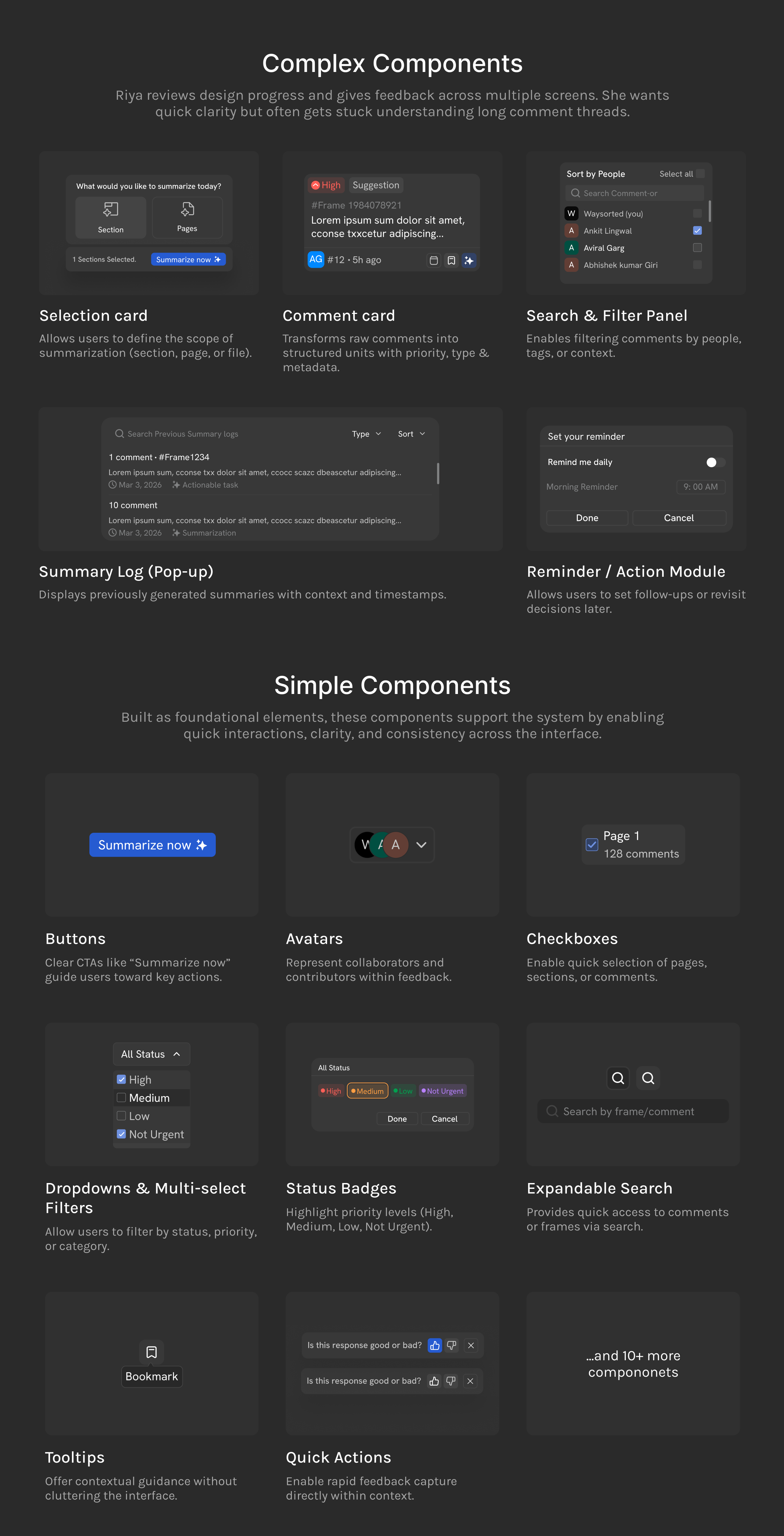
Working closely with my UX researcher and design advisors, we explored multiple iterations of complex components, breaking down how feedback, summaries, and actions could be structured into clear, scalable UI patterns.

After several rounds of testing, we landed on a system that made large volumes of feedback feel simple, scannable, and usable.

Showcasing the final set of components that power the entire tool.

Complex and simple component system

Step #9 - Currently we Testing with users (PM,Dev, Designers, Design teams)

Currently conducting usability testing with PMs, designers, and developers to validate the solution and uncover real-world feedback patterns.

+ Why

To evaluate how current tools handle feedback and identify gaps where structured summarization and decision-making could be improved.

Step 9 in progress
Thank you for watching!

More Case Studies

AI Health Assistant (ChatGPT) with Personalized Profile & Guided Medical Insights

AI Health Assistant (ChatGPT) with Personalized Profile & Guided Medical Insights

A Conversational AI Platform for decoding prescription, Symptom Tracking & Personal Profiles

View Case study

Leveraged skills

Conversational AIProduct Strategy